'The law is not what I want it to be': HIV expert
HIV CRIMINALIZATION / Cross-Canada forum on HIV disclosure comes to town
Patty Comeau / Vancouver / Thursday, March 12, 2009
Share |

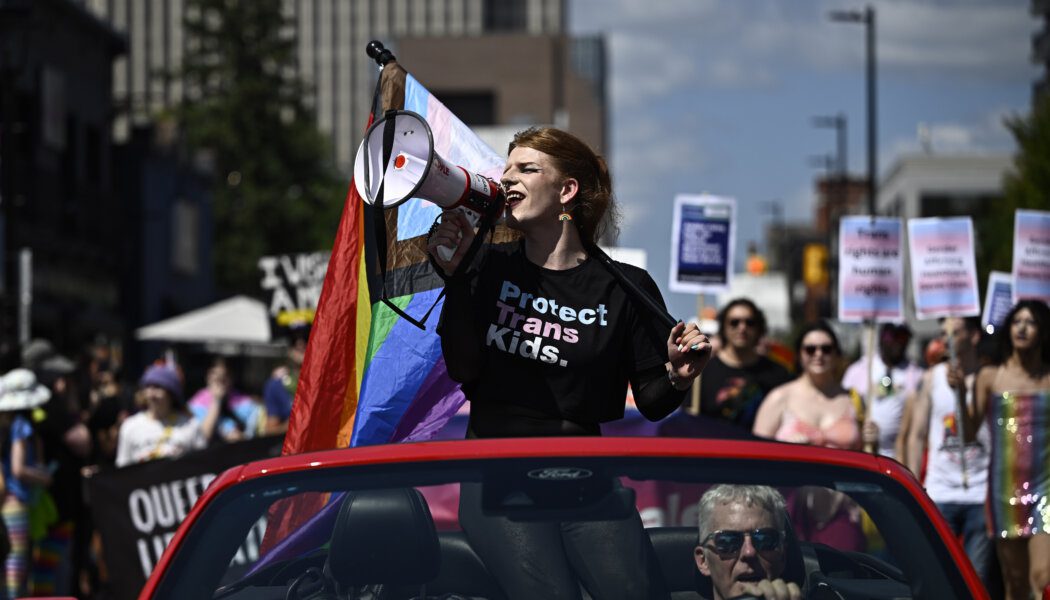
KEEP PROOF OF DISCLOSURE. "The law places really onerous, heavy obligations on people living with HIV," says forum facilitator Glenn Betteridge. He urges HIV-positive people to document their disclosure to sex partners.
(SARAH RACE PHOTO)
“The law is not what I want it to be,” says Glenn Betteridge. “It is what it is.”

A former lawyer and policy advisor with an extensive background in fields related to HIV/AIDS, Betteridge was in Vancouver Mar 1 for a public forum on the criminalization of HIV nondisclosure.

In 1998, the Supreme Court of Canada ruled that you could be charged with aggravated assault for failing to disclose your HIV-positive status to a sex partner prior to having unprotected sex.

Since then, an increasing number of HIV-positive people, including many gay men, are being charged with, and convicted of, violent offences ranging from aggravated sexual assault to murder (see analysis page 18).

About 25 people attended the Vancouver forum; many brought questions about the grey areas surrounding HIV disclosure laws.

The forum was part of a Canada-wide tour hosted by the Canadian AIDS Treatment Information Exchange (CATIE), in conjunction with the Canadian HIV Legal network and local AIDS organizations.

“The law places really onerous, heavy obligations on people living with HIV,” says Betteridge.

Asked how he feels about these legal obligations, Betteridge is reluctant to comment further. He says he’d rather not express his personal views on the subject while he’s moderating the forums, so that he can continue to act as a more impartial facilitator.

In a recent interview with Xtra West’s Toronto sister paper Xtra, Betteridge noted that there are disparate viewpoints within the gay community about the best way to handle failure to disclose allegations.

“We almost talk about those things in a utopian aspirational way,” he said. “The idea that people living with HIV can have unprotected sex and face no consequences because the other parties should be looking out for themselves, asserting that as a human right, is tenuous.”

He said he hasn’t yet made up his mind about criminalizing non-disclosure.

“I am not sure,” he told Xtra. “It’s an issue I struggle with. I need to have my viewpoint more informed by those people who are feeling this profoundly to decide where I think the truth lies in this.”

For now, Betteridge advises people who have tested positive to clearly disclose their status to potential sex partners before the first fly is unzipped  — and to keep evidence to prove they disclosed.

For example when meeting online for face-to-face hookups, keeping a clearly worded email disclosure and its reply  — stating that the person understands the risks associated with sero-divergent sex  — can mean less worry about future legal fallout.

Similarly, speaking openly and directly about one’s HIV-positive status in the company of friends and a new date makes those friends witnesses to the disclosure, Betteridge explains.

Vice-chair of the British Columbia Persons With AIDS Society (BCPWA) Ken Buchanan agrees that these are good ideas.

With increasing numbers of people finding casual sex partners on websites, he remarks, email is a practical way of keeping records of disclosure.

Consistently practicing safer sex doesn’t eliminate the need to disclose, either, Betteridge told the Vancouver forum.

When it comes to an individual’s obligation under the law in this country, Betteridge bluntly states, “a condom doesn’t cut it.”

Though courts in some countries, including Canada, have made judgments based on rates of infection for certain sexual acts, viral load, and the use of condoms, there is to date no definitive legal ruling that practicing safer sex belies the need for open dialogue about HIV status.

Counting only those charges that went to trial, about 75 criminal prosecutions for non-disclosure have taken place in Canada since 1989, the majority of which consisted of complaints by one or more women against HIV-positive men.

One such case, that of Charles Mzite, ended in a BC Supreme Court conviction only hours after Betteridge’s presentation in Vancouver. Mzite was found guilty on four counts of aggravated sexual assault for having unprotected sex with women who testified that they did not know he had the virus.

Betteridge says disclosure can be a factor even between HIV-positive individuals.

Although the courts have yet to see such a case, the risks associated with drug-resistant strains of HIV, which can be passed to someone with a currently manageable strain, means disclosure may be required there too.

At the core of this whole issue is the continued stigmatization of HIV, says Buchanan.

“I know people who’ve had the disease for years, [and] people they work with, their families don’t know. There’s very few of us that are the public faces of HIV or AIDS.”

This stigma, and possible legal worries, he says, can discourage people from being tested regularly. 

Be open and honest with all sexual partners and get tested regularly, Buchanan advises. Despite what may sometimes feel like a slow pace of change, after 25 years of activism, he says, “we have to just keep at it.”


Share |


Reader Comments


Serosorting and disclosure is dangerous strategy
The assumption behind HIV status disclosure is dangerously hypocritical. A person who is sexually active can never be absolutely sure they are truly HIV negative after their latest test or in the window period before if they have sex during this time; especially with more than one partner or if their monogamous partner's status is unknown or out-of-date. So why wouldn't a person who thinks he is probably HIV negative be charged if he had unprotected sex as well. Or if protected sex isn't good enough for HIV pos people, then why is it good enough for those who tested negative but continue to have sex with others after their neg. result? Why is one of the two partners who consent to barebacking able to legally persecute another simply because one's positive status is known; and the other's is, at best, only probably negative based on a past snapshot in time which may no longer be valid? If you are consensually unprotected, you should make that act of faith or gamble, not your partner. One's health is ultimately one's own responsibility. If a person is sexually active in today's world, one has to assume that any of their partners could be positive, for any STD, at any time. Everyone should practice safer sex if they are truly responsible for their own health, regardless of disclosure or none. This "self-protection" strategy was how safer sex was designed and such an assumption that "anyone could be" protected our community in the early days of the AIDS epidemic. This is why the number of new HIV infections leveled off and even dropped in the early 90s and saved so many lives in my generation. Serosorting, relying on disclosure rather than self-protection; and then enforcing disclosure through criminalization of HIV is a hypocritical and dangerous UN-safe sex strategy. For any person to be charged when they practice safer sex is an even greater threat to any sensible safer sex strategy. Nothing is safe for sure. So stop th
Stephen Emery, Burnaby BC
03/14/09 4:39 PM EST
Report this comment to moderator.
Safer sex is not enough?
I was under the understanding that using a condom was enough if an Hiv+ person didn't tell someone else that they had it, and only with this article did I see that that is not so. I think that there should be a greater dialogue on this issue.
Trevor Taylor, Abbotsford BC
03/20/09 2:18 AM EST
Report this comment to moderator.