Lauren Berlant's queer optimism
Q&A / Theorist on sex, fantasy, same-sex marriage and President Obama
David Seitz / Toronto / Wednesday, February 20, 2013
Share |

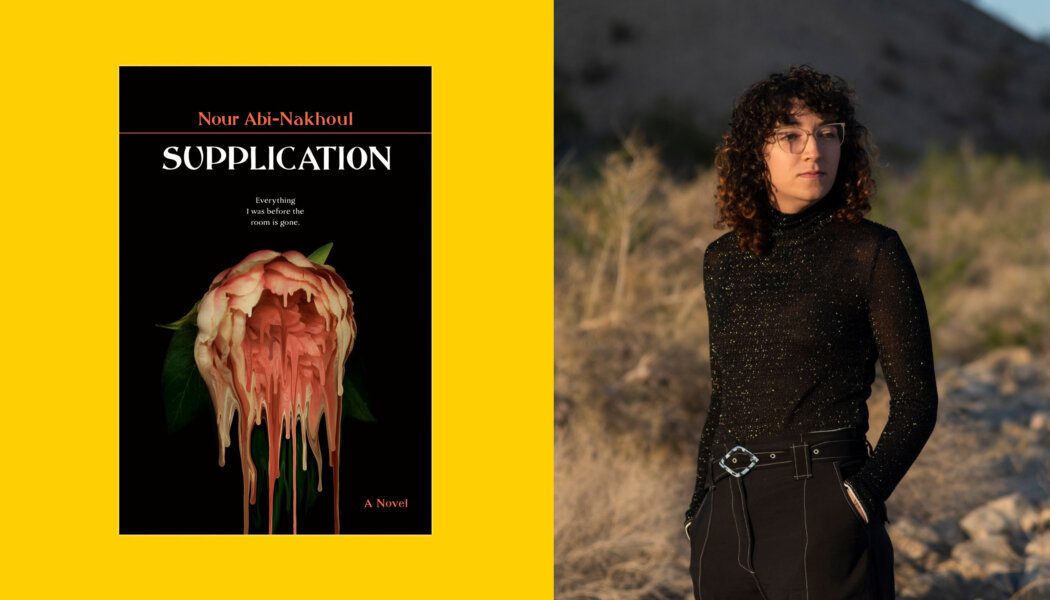
Queer theorist Lauren Berlant has a reputation for creative, surprising analyses of sex, politics, fantasy, citizenship and law. The University of Chicago English professor's most recent publication, Cruel Optimism, won the Alan Bray Memorial Book Award, given by the Modern Language Association for the best book in queer studies in literature or cultural studies.
 
Berlant was recently at the University of Toronto as the visiting Northrop Frye professor of literary theory at the Centre for Comparative Literature. At her Jan 31 public lecture, Sex in the Event of Happiness, Berlant moved between discussing social transformation, high theory and anal penetration without skipping a beat. Xtra's David Seitz chatted with Berlant before the talk.
 
Xtra: Cruel Optimism explores scenes in which people desire a range of ideals or objects that undermine their success. Are there political movements or experiments that you look to optimistically -- on terms that feel less "cruel?”
Lauren Berlant is a professor of English at the University of Chicago and the author of Cruel Optimism.
 
Lauren Berlant: A relation of cruel optimism is a double bind in which your attachment to an object sustains you in life at the same time as that object is actually a threat to your flourishing. So you can't say that there are objects that have the quality of cruelty or not cruelty; it's how you have a relationship with them.
 
All political movements in this regard are complicated spaces. But every movement that we've ever been in reproduces issues of inequality around race, gender, sexuality and education, let alone just personality glitches. That also can be devastating.
 
That's why I'm interested in thinking about politics as comic. If we understand that everything we do is going to be flawed and awkward and slapstick, we have a better chance at surviving our disappointments on behalf of a political goal. I think it's the job of writers and critics and artists and everyone to create better objects for better fantasies – which is to say, objects that offer the possibility of less cruel-optimistic relations.
 
One great development in LGBTQ politics over the last decade has been the claim that social policy should rely on shoring up relations of care rather than institutional relations, like that of marriage and family. So one of my students said, "I could marry my grandmother." But what he meant was not that he wanted to marry his grandmother, but that to him, her care of him gave him an obligation to care for her, and he now saw that as a part of a queer politics. Thinking about what it means to care as the source for new social relations that would have policy implications is a really great development in LGBTQ politics.
 
You've had some hilarious takes on the state of US politics. During the 2012 campaign you described a vote for Obama as "he sucks less bad." What do you make of Obama's inaugural comments on same-sex marriage?
 
It has always seemed to me that Obama's refusal to support LGBTQ politics was a concession to what he felt were the more conservative sides of his support. I didn't think he believed it. I thought it was cowardly, and so when he finally decided that it was time for him to placate his disappointed liberal supporters by admitting an opinion I'm sure he'd always had, I didn't jump up and down with glee.
 
Inclusion really matters. Him saying Stonewall was a part of American liberation history matters. His support for "our gay and lesbian brothers and sisters" matters. But I also feel very strongly that he allowed himself to say what he already felt as a way of distracting attention from progressive attention to many other vicious economic and military practices his administration promotes. I have a lot of anger about the neoliberal/progressive politics management that gives social issues lots of privilege but really doesn’t care about economic justice or the brutality of “war on terror.”
 
Queer activists in the US often criticize a focus on same-sex marriage in LGBTQ movements as conservative, exclusive and mainstreaming. In Cruel Optimism, you're curious about normativity -- not because you're unwilling to challenge or interrupt it, but because you want to understand it. What does your approach mean for politics?
 
When I first started working on citizenship, older people would say to me, "How can you even take the state seriously? The state is a monster of imperialism." And I said, "I'm on the side of people's survival, and if people's optimism is attached to things like the state, I want to know what the state stands in for."
 
If we start seeing our objects of ambition and desire as stand-ins, as things that organize our attachment to life, we can have a totally different understanding and a kind of generosity toward those objects. That's why I started working on citizenship in the first place, not because I loved it, but because I saw that people saw it as a state where they could imagine being collective, and being willing to be collective in ways that were also inconvenient for them.
 
So when LGBTQ people want what lots of people want -- which is a relief from their loneliness and a social world that they can feel welcomed in -- I can't disrespect their objects; I just have to say, "Is that all there is?" For me, it's never about shaming people's objects; it's always about creating better and better objects. It's always about creating better worlds, making it possible for us to think in more and different kinds of ways about how we relationally can move through life.
 
I never want someone to talk less in class; I want everyone to talk more. I never want less fantasy; I always want more. I never want less citizenship; I always want more -- more different ways of being in relation. And then we struggle it out, because we struggle with the ways in which they're incommensurate. But there's no reason to lay more shame on what people want.
"If we understand that everything we do is going to be flawed and awkward and slapstick, we have a better chance at surviving our disappointments," says Lauren Berlant.
 
What would you say makes your work queer now?
 
One of the ways that I am so fundamentally motivated as a queer scholar is my absolute commitment to eradicating erotophobia: thinking of sex as a threat to happiness, thinking of the appetites as a threat to sociality, when there is no sociality without them. I think if there's less erotophobia, the world would have less sexual violence; there would be more of a sense that bodies and pleasures really can be a source for a genuinely flourishing sociality. But it will take much reeducation to think about other people as vehicles to happiness rather than a threat. People aren’t well trained for experimental patience with intimacy.
 
I'm all for training my students in curiosity. One thing we talk about is what an LGBTQ teacher's job is these days. How much is the project of a queer pedagogy not just the project of distributing more fabulousness, or learning more history, but also of learning to have curiosity about the objects that sustain us intimately and politically? For me, not taking the object for granted – not assuming that someone’s erotic patterns are a clear and coherent story about who they are, for example – is a fundamental contribution of queer work.


Share |


Reader Comments


Dr Joyce Brothers for bou bou sex phobes
What classist tripe. Her bourgois students pay her money (from their parents) to learn to eroticize outside her definition of some weird mainstream, while working class non-elitist normal and regular people just fuck and love it. No books or analysis. Just do it, man. This is anti-queer because it is natural and since there are no taboos there are no need for taboo brokers like this person. Queer is the taboo brokerage firm of middle class bourgeois women and women-identified gay men who find actual body sex, spurts and fluids, mucous and muscles all too too much therefore a need to mitigate this too hot to handle reality via queer brokers of bou bou repression. Nauseating! The spiritualists of the oughts. Queer is a lie! And this person is a Barnum.
Queer is a the enemy of fucking, Toronto ON
02/20/13 1:57 PM EST
Report this comment to moderator.
...and misogyny is the emeny of queer
Woa. Sir, besides the scathing anti-intellectualism and self-referential argument in your post, what is up with the "women and women-identified gay men who find actual body sex, spurts and fluids, mucous and muscles all too too much"? What makes you think that women and women-identified men (wtf does that mean anyway, sissy boys?) and LB herself, don't have those nasty dirty body sex? As a gay man raised by dykes, I find your taking ownership of queer fucking so misconstrued. AND Lauren has written quite extensively on queer sex and critiques of taboos, contrary to your assessment (did you even care to see what her work is about?). Seriously.
DPK, Vancouver BC
02/20/13 11:37 PM EST
Report this comment to moderator.
This is a conservative set of arguments
I'm struck by how much of this is based on straw man arguments and how conservative it really is. For one thing, both the interviewer and Berlant reduce the anti-gay-marriage arguments to some very simplistic caricatures. I'm co-founder of a group called Against Equality, and we've always made it clear that our point is not that people should not get married but that we need to stop bolstering the state's investment - an often literal one - in marriage. Here's an interview where we make that clear. http://nomorepotlucks.org/site/%E2%80%9Cneoliberalism%E2%80%99s-handiest-little-tool%E2%80%9D-against-equality-on-marriage And secondly, how is her discussion of what she'd like to do by eradicating erotophobia anything but a deeply conservative one, which seems otherwise only because, ooh, it concerns sex? This does nothing to challenge the systemic structures that perpetuate inequality and oppression - it gives people great sex, and the ability to enjoy it more, perhaps, but where in all of this is, for instance, a challenge to the encroachment of neoliberalism? How is her current mission any different from what some/many sought, for instance, in the 70s? She does mention Obama's economic policies, but none of that affects her understanding of the marriage issue, which she effectively delinks from a system of economic brutality - when it is in fact very much a part of it. This seems like nothing more than a conservative, left neoliberal argument. I'll look forward to reading the book and trust that arguments there are more complicated.
Yasmin Nair, Chicago Illinois
02/24/13 1:40 AM EST
Report this comment to moderator.